Healthcare IT
Healthcare IT strategy involves aligning technology investments with clinical, operational, and regulatory priorities, and the gap between what health systems need and what vendors promise is often significant. The posts here cover healthcare IT consulting, EHR and FHIR interoperability, clinical AI governance, and what healthcare organizations should expect from an IT strategy engagement. Content is written for health system leaders, medtech founders, and payer technology teams.
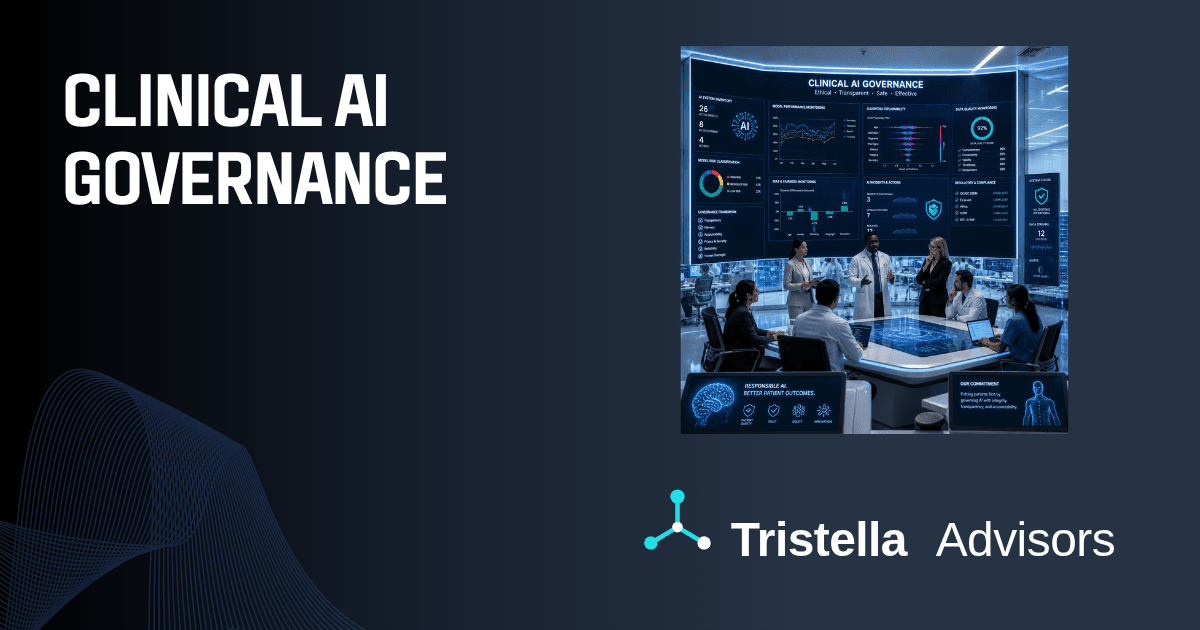
What Is Clinical AI Governance? A Practical Guide for Health System Leaders
Clinical AI governance is the policies, processes, organizational structures, and technical controls that a health system uses to ensure AI systems deployed in clinical and administrative workflows operate safely, accurately, and equitably throughout their operational life. It is distinct from general enterprise AI governance in ways that matter: patient safety risk, FDA SaMD obligations, ONC transparency requirements, HIPAA data architecture, and equitable outcomes obligations create governance requirements that general enterprise frameworks do not address. This post covers what clinical AI governance actually includes across eight program components, how clinical AI data governance differs from general data governance, why governance is not the same as compliance, what the governance responsibility looks like specifically for CIOs, and the best practices that separate functioning governance programs from governance frameworks that exist only on paper.
Best Healthcare IT Strategy Consulting Firms for Hospitals and Health Systems in 2026: How to Evaluate Your Options
Healthcare IT strategy consulting is a distinct discipline from implementation or staffing: it is the work of deciding what to build, buy, prioritize, and govern across a multi-year technology horizon. In 2026, that work is inseparable from AI strategy, and the firms that do it well come at it differently. Some bring tier-1 management consulting rigor (McKinsey, Oliver Wyman); some bring Big 4 advisory breadth with an integrated path to implementation (Deloitte); some embed their advisory in proprietary analytics platforms (Health Catalyst); and some bring market intelligence and forecasting that positions technology decisions in the context of projected demand (Sg2 by Vizient). This post evaluates six firms across those distinct models, describes the client profile each serves best, and gives health system and payer leaders a practical framework for matching the type of question they are asking to the type of firm built to answer it.
What Is FHIR and What Does It Actually Mean for Healthcare Organizations?
FHIR (Fast Healthcare Interoperability Resources) is the HL7 International standard that defines how health data is structured and exchanged between software systems using modern REST APIs, replacing decades of proprietary formats and point-to-point interfaces. For healthcare organizations, FHIR is now as much a regulatory requirement as a technology choice: ONC's 21st Century Cures Act rules mandate FHIR R4 for EHR certification and patient data access, while CMS-0057-F requires payers to implement four FHIR APIs by January 2027. This post covers what FHIR actually is, how it works, what the federal mandates require of providers and payers, where FHIR creates opportunity for clinical AI, and what it does not solve.
Best Healthcare IT Consulting Firms for Hospitals and Health Systems in 2026: How to Evaluate Your Options
The best healthcare IT consulting firm for your hospital or health system depends on what you are actually trying to accomplish: a large-scale EHR implementation, a clinical AI governance program, revenue cycle transformation, or a specific platform like Salesforce Health Cloud. This post evaluates six firms across distinct models- boutique specialists, an EHR platform leader, full-service advisory, and large-scale transformation firms- on the criteria that matter most to hospital and health system buyers. Each firm profile describes what it is genuinely best for, what its limitations are, and which client profile it actually serves well.
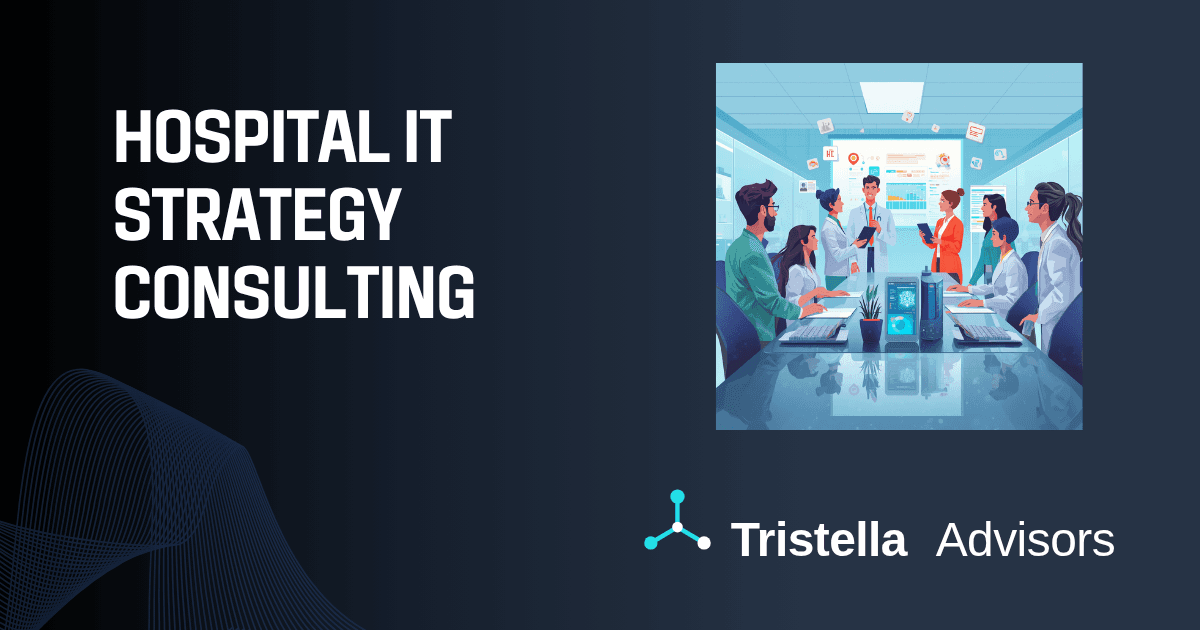
Hospital IT Strategy Consulting: What It Is, What It Costs, and When Your Hospital Needs One
Hospitals searching for IT strategy help use "hospital IT" language — but most advisory firms publish everything under "healthcare IT," which is why the gap exists. This post addresses hospital buyers directly: what hospital IT strategy consulting covers (EHR optimization strategy, clinical AI and decision support, interoperability, vendor governance, revenue cycle integration), what makes it distinct from both general healthcare IT consulting and Epic implementation work, and how consulting needs differ by hospital type — health system, academic medical center, community hospital, and critical access hospital. The post also covers what hospital IT strategy consulting costs ($20K–$50K for a discovery engagement, $10K–$25K/month for ongoing advisory) and what to look for in a consultant, including why acute care experience matters in ways that general healthcare industry experience does not.
Clinical AI Governance for Health Systems: A Practical Framework for CIOs, CMIOs, and Compliance Teams
Clinical AI governance is not the same as HIPAA compliance, and health systems that treat them as equivalent are carrying regulatory exposure they have not yet measured. This post is a working framework for CIOs, CMIOs, and compliance teams who need to govern AI tools operating in clinical settings: the FDA SaMD classification questions that determine which tools require clearance, what a clinical AI committee actually does and who needs to be on it, how to risk-tier an AI inventory across a health system, and the six governance pillars that distinguish programs with real authority from programs that exist on paper. The post covers why clinical AI governance fails when it is designed like general enterprise AI governance, how shadow AI in clinical departments is the most common gap we find in health system assessments, and the specific steps that produce a durable governance program.
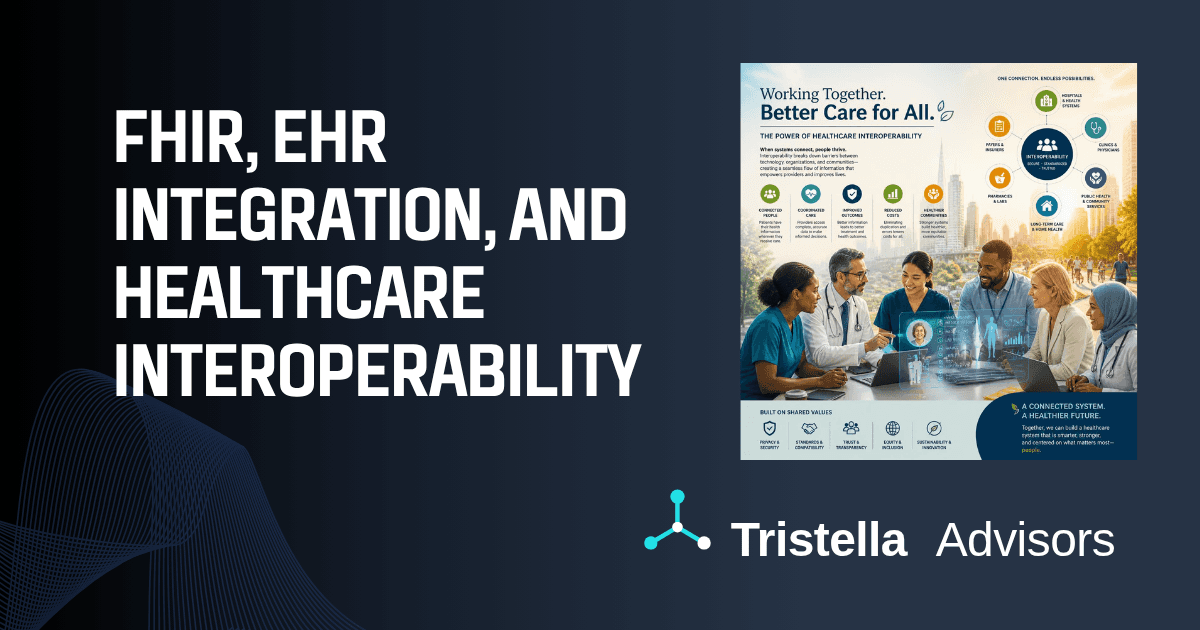
FHIR, EHR Integration, and Healthcare Interoperability: What Healthcare Organizations Actually Need to Know
Most healthcare organizations know they need to share data across systems. Most have already heard of FHIR. Far fewer understand what FHIR actually does, what it leaves unsolved, and why EHR integration projects still fail regularly even after the standards problem has been solved. This post covers the full picture: what FHIR R4 enables and what it does not; the regulatory mandate that made FHIR APIs mandatory for every ONC-certified EHR; how HL7 v2 and FHIR coexist in production environments; and where the real complexity lies in multi-system clinical data integration. For organizations evaluating Salesforce Health Cloud, there is a full section on how it connects to EHRs via FHIR and what clinical workflows actually benefit from that integration. The post closes with the governance and organizational questions every health system needs to answer before the project starts.
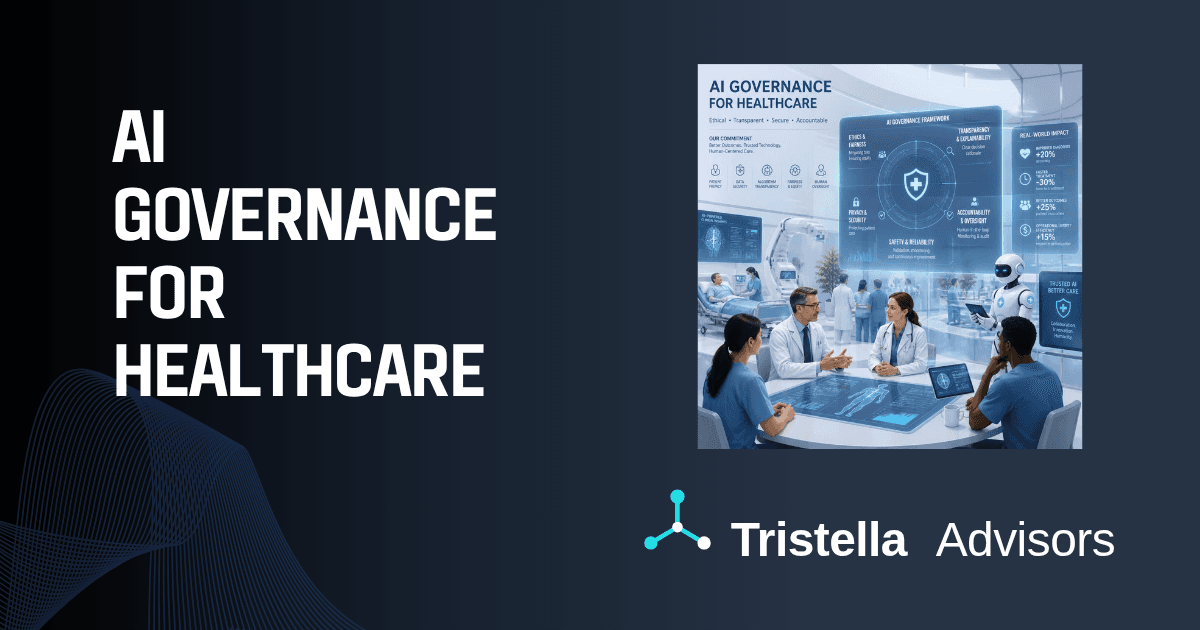
AI Governance for Healthcare: HIPAA, Clinical AI, and What Regulated Organizations Actually Need
AI governance in healthcare is not the same as HIPAA compliance. HIPAA governs how protected health information is handled. AI governance governs whether AI systems make decisions that are accurate, accountable, fair, and defensible under frameworks HIPAA was never written to address. Healthcare organizations deploying AI in 2026 face overlapping regulatory requirements from at least four distinct sources: HIPAA, FDA device classification rules, ONC clinical decision support guidance, and the EU AI Act for organizations with European exposure. Each layer asks different questions about different risk surfaces. This post explains what each layer actually requires, where they overlap and where they do not, and what a complete healthcare AI governance program needs to cover to hold up under scrutiny from regulators, enterprise customers, and health system risk committees.
What Is a Healthcare IT Consultant? Roles, Costs, and When to Hire One
A healthcare IT consultant is an external specialist hired to advise healthcare organizations on technology strategy, system implementation, regulatory compliance, and digital transformation. But the title gets applied loosely, and hiring the wrong type is a common, expensive mistake. There are six distinct specializations: EHR implementation and optimization, IT strategy, cybersecurity and HIPAA compliance, clinical informatics, revenue cycle management, and AI and emerging technology. Each addresses a different problem type, operates at a different layer of the technology stack, and requires different credentials to evaluate. This guide covers what each type does, when to hire outside expertise vs. build internal capability, how to evaluate a consultant, and what healthcare IT consulting costs in 2026.
Healthcare IT Strategy for Medtech, Pharma, and Life Sciences: What's Different and What It Costs
Healthcare IT strategy for medtech, pharma, and life sciences companies is governed primarily by FDA regulations, not by HIPAA and ONC interoperability rules that shape health system IT decisions. The technology choices that carry compliance risk are different; what validation means is different; how AI is governed is different; and what a technology strategy must produce before a company can ship a product or submit to a regulator is different. This post explains what medtech IT strategy actually covers (SaMD, IEC 62304, FDA's PCCP for AI/ML devices), what pharma IT strategy requires (21 CFR Part 11, GxP validation, CDISC-compliant clinical data systems), and where the two frameworks still intersect on HIPAA and interoperability.
What Does Healthcare IT Strategy Consulting Cost? Fees, Retainers, and What You're Actually Buying
Healthcare IT strategy consulting costs range from $3,500 for a single advisory day to $150,000 or more for a full implementation project, with retainers ranging from $8,000 to $15,000 per month for ongoing advisory work. The range is wide because the problems are wide. This post breaks down what each engagement type costs, what drives the variation between big-firm and boutique pricing, and what the fee is actually buying, so you can evaluate a proposal with enough context to ask the right questions.
What Does a Healthcare IT Strategy Consultant Do and When Do You Need One?
A healthcare IT strategy consultant helps health systems and health-tech companies make better technology decisions before they commit to a direction, and helps them recover when a decision has already gone wrong. The work is advisory, diagnostic, and planning-focused. It answers the question "what should we do?" before implementation consulting answers "how do we make this happen?" With 50 to 70% of healthcare IT projects failing to meet their original objectives, the strategy work that happens before a vendor is selected or an implementation begins determines most of the outcome. This post covers what healthcare IT strategy consultants actually do, five situations where you need one, and what to look for when hiring.
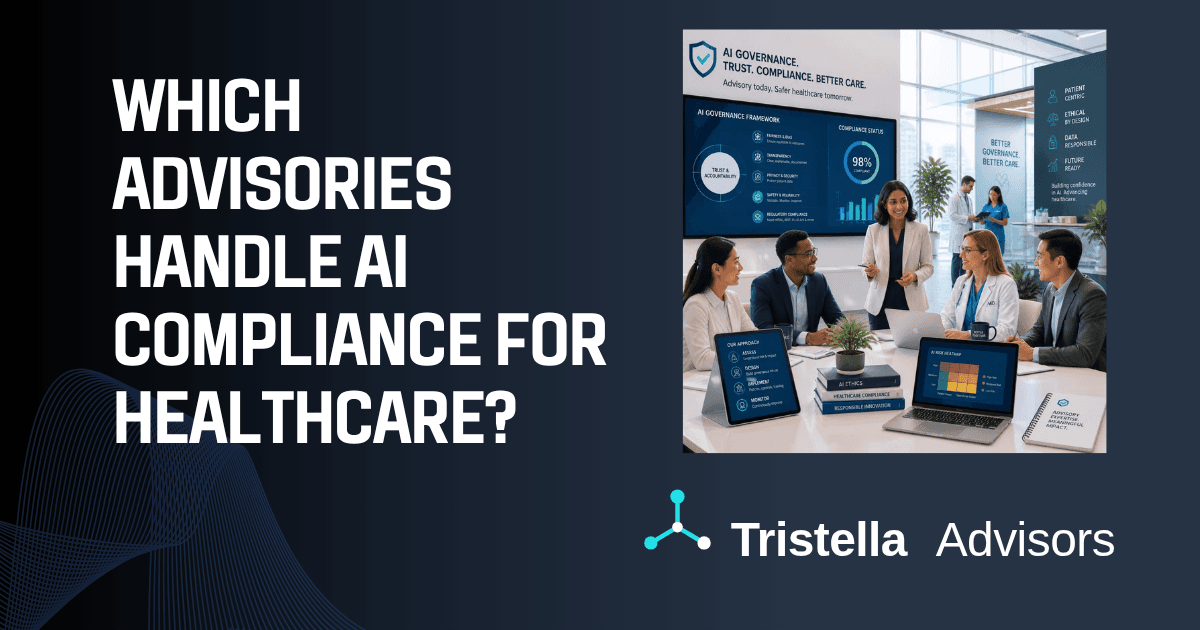
Which Advisory Firms Handle AI Governance Compliance for Healthcare Organizations?
The firms that actually solve healthcare AI governance are not the ones who deliver a HIPAA checklist and leave. The failure point in nearly every healthcare AI governance engagement is not the compliance framework. It is what happens to that framework once it exists on paper and clinical reality takes over. Three failure modes recur: clinician workflow rejection, unclear accountability when a model is wrong, and governance committees with no teeth for enforcement. This post explains a three-step Governance-Activation Framework that addresses all three, and who it is designed for.
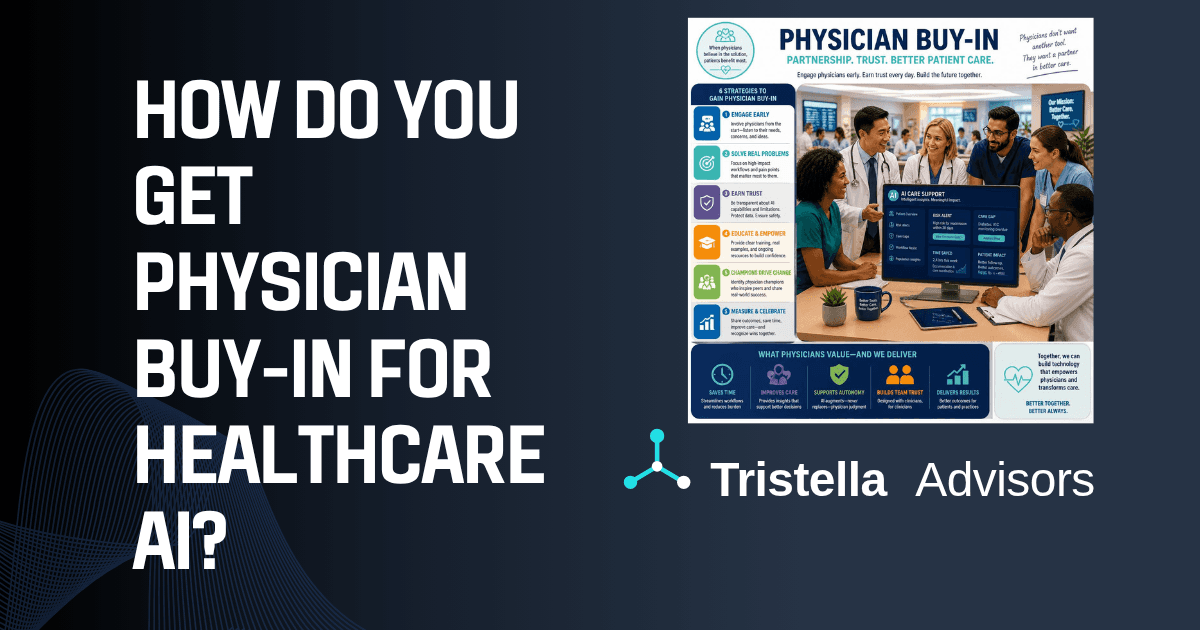
How Do You Get Physician Buy-In for Healthcare AI?
81% of physicians are frustrated with how their organizations implement AI, not because they resist the technology, but because they're excluded from the decisions. Getting physician buy-in isn't a communications problem. It's a design problem, and it starts well before the first conversation with a vendor.
Your healthcare AI pilot didn't fail because of the technology
80% of healthcare AI projects fail to scale beyond the pilot phase. Most post-mortems blame the data, the vendor, or the EHR integration. The actual cause is more consistent: the technology budget was planned in detail, and the change management budget wasn't planned at all. In clinical environments, where physicians won't use tools they don't trust and nurses will find workarounds for anything that adds friction, the people side of an AI implementation is 80% of the work. This post covers why healthcare is uniquely hard for AI adoption, what the research says about what actually moves the needle, and what health system leaders need to budget for before the next pilot launches.
How to Keep AI HIPAA-Compliant in 2026 — Including the Tools You Didn't Approve
AI adoption in healthcare doubled last year. Most of it happened without compliance teams knowing. Audits routinely uncover about 70 unauthorized AI applications per health system, many of which handle patient data through vendors that never signed a BAA. OCR doubled its penalty collections in 2025. The first update to the HIPAA Security Rule in 20 years is landing this summer. If you're a healthcare administrator trying to figure out where your actual exposure is, this is where to start.