AI Governance
AI governance is the set of policies, processes, and controls that determine how your organization builds, deploys, and monitors AI systems. The posts here cover governance frameworks, assessments, tooling decisions, and the gap between AI strategy and AI governance. Most are written for CTOs, VPs of Engineering, and compliance leads at companies that have moved past the pilot stage.
Best Clinical AI Governance Software and Advisory Firms for Health Systems in 2026: How to Evaluate Your Options
Clinical AI governance solutions for health systems come in two forms: software platforms that monitor, detect bias, and maintain audit trails across deployed AI systems, and advisory firms that design the governance frameworks those platforms will operationalize. Most health systems serious about scaling AI need both, but the sequence matters — governance software monitors decisions you have already made, and organizations that deploy monitoring tools before defining their policies end up with data they do not know how to act on. This post covers five software and platform options (Ferrum Health, Credo AI, Arthur AI, Arize AI, Fiddler AI) and three advisory options (Tristella Advisors, Deloitte, Accenture), with evaluation criteria specific to clinical AI: FDA SaMD lifecycle alignment, EHR and FHIR compatibility, clinical population bias monitoring, audit trail depth, and human oversight workflow design.
AI Governance Failures: Real Cases, Regulatory Consequences, and What Each One Cost
The six cases in this post, iTutorGroup, Optum, IBM Watson for Oncology, the UK A-level grades algorithm, Australia's Robodebt scheme, and the Robert Julian-Borchak Williams facial recognition arrest, span six sectors, four countries, and more than a decade of AI deployment. Each involves a named organization, documented regulatory or legal consequences, and specific costs. Together they illustrate the same underlying pattern: automated systems making consequential decisions at scale without the outcome testing, validation, or oversight infrastructure needed to catch what the system was actually doing. The costs in every case significantly exceeded what a functioning governance program would have required.
AI Governance Failures: What Goes Wrong and What It Actually Costs Organizations
AI governance failures don't happen because AI breaks. They happen because the oversight, accountability, and monitoring infrastructure to catch what AI is doing wrong doesn't exist. This post looks at four recurring patterns behind the biggest governance failures, from Amazon's hiring algorithm that systematically downgraded women's resumes for three years before anyone intervened, to Zillow's iBuying algorithm that produced $500 million in losses when market conditions changed faster than the model could detect. Each case had an identifiable governance gap that made the failure predictable: no AI inventory, no post-deployment monitoring, vendor attestation accepted as validation, or no incident response plan. The post covers what these failures actually cost beyond the headline number, what organizations that avoided major failures did differently, and where to start if your organization hasn't built governance infrastructure yet.
SSPM vs. AI Governance Tools: Why They're Solving Different Problems
SSPM and AI governance tools are not competing products, and they are not two names for the same category. They address different risk surfaces, answer different questions, and belong to different parts of your security and compliance budget. In 2026, vendor marketing has blurred the line enough that buyers are routinely purchasing the wrong thing for the problem in front of them. This post explains what each category actually does, where the genuine overlap is, and how to decide what your organization needs.
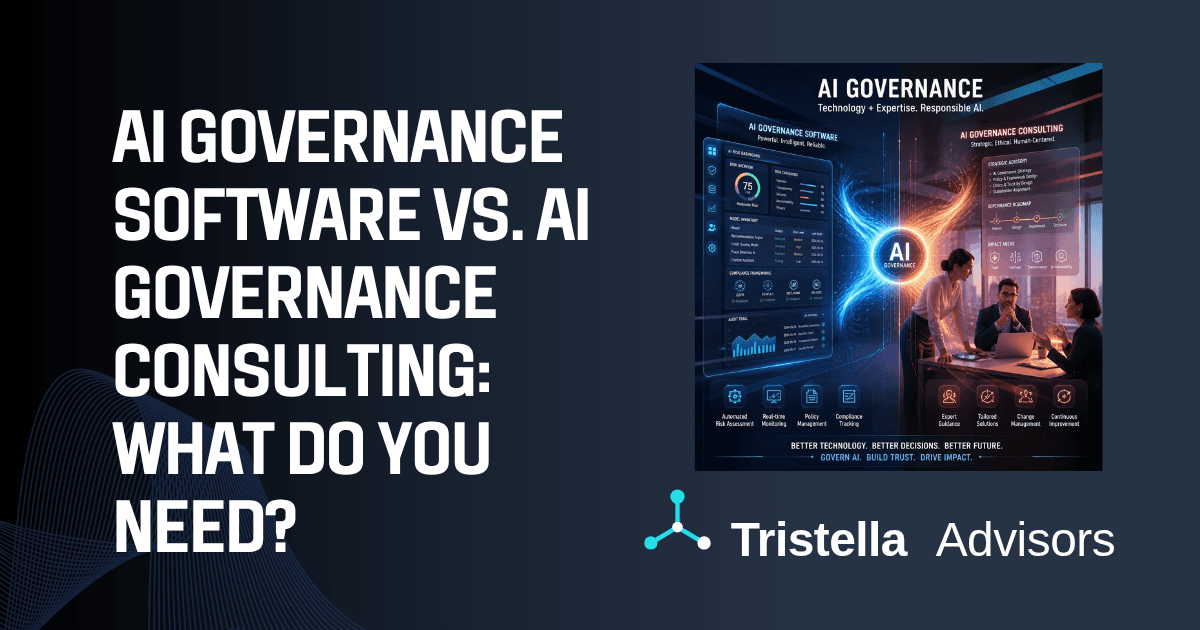
AI Governance Software vs. AI Governance Consulting: What Your Organization Actually Needs
AI governance software and AI governance consulting are not competing choices. Platforms like Credo AI, Zenity, Noma, SurePath AI, and Straiker solve real problems: policy enforcement at scale, agent behavior monitoring, shadow AI discovery, and compliance evidence management. What they do not do is design the governance model they depend on. If your organization does not yet have a documented AI inventory, named accountability, written policies, and a tested incident response process, the gap is in governance design, not governance tooling. This post explains what each software category does, what it cannot do, and how to decide which layer of the problem your organization actually has.
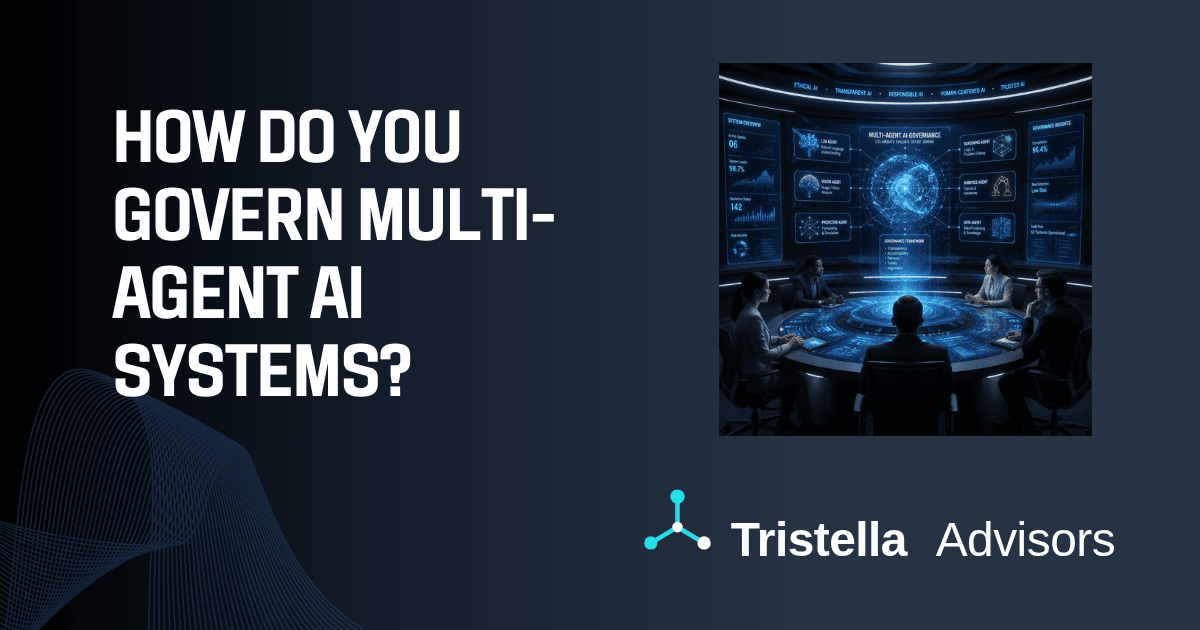
How Do You Govern a Multi-Agent AI System in Production?
Most organizations do the pre-launch governance work with varying quality. The production work is where it actually fails. 80.9% of technical teams have AI agents in active testing or full production deployment. Only 14.4% of those agents went live with full security and IT approval. That gap is where production governance incidents come from. This post covers the four operational practices that keep a live multi-agent system within the boundaries you designed: observability, access review, kill switch architecture, and incident response.Most organizations handle pre-launch governance with varying quality. The production work is where it actually fails. 80.9% of technical teams have AI agents in active testing or full production deployment. Only 14.4% of those agents went live with full security and IT approval. That gap is where production governance incidents come from. This post covers the four operational practices that keep a live multi-agent system within the boundaries you designed: observability, access review, kill switch architecture, and incident response.
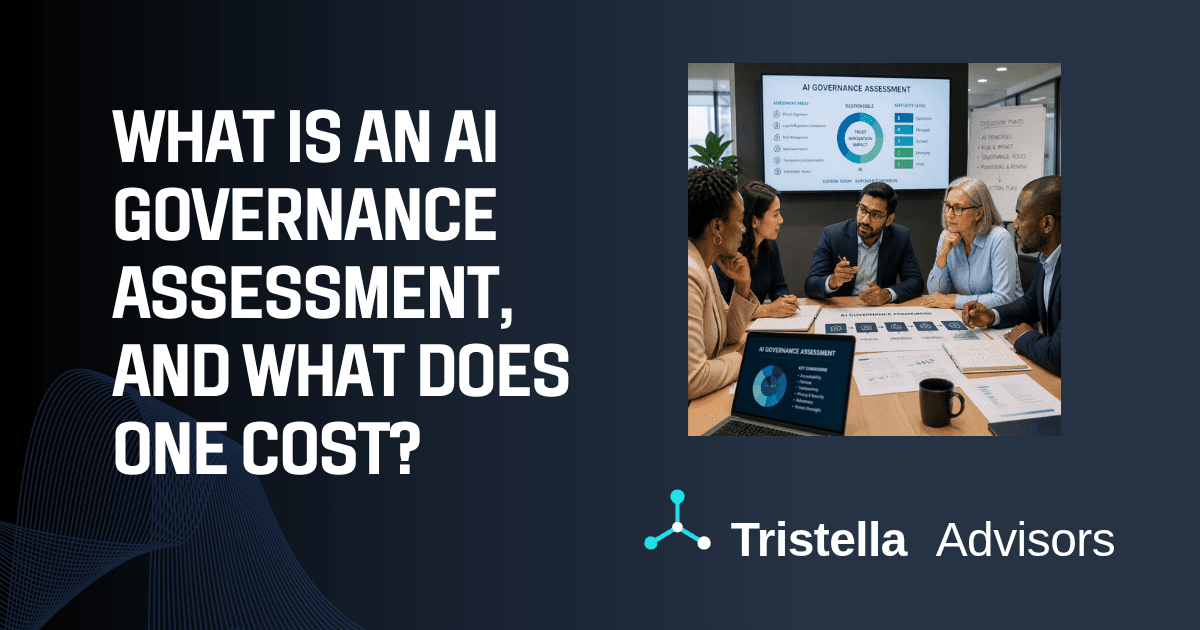
What Is an AI Governance Assessment and What Does One Cost?
An AI governance assessment is a structured review of how an organization identifies, controls, and is accountable for its AI systems. A good one produces two things: a scored picture of where your governance posture stands today, and a prioritized roadmap of what to fix first. 87% of organizations report having AI governance frameworks. Fewer than 25% have fully implemented the controls described in those frameworks. This post covers what an assessment actually covers, what the maturity model looks like, and what one costs across three tiers, from enterprise frameworks to scoped boutique engagements.
What Enterprise Buyers Ask About AI Governance Before Signing a Contract
Enterprise buyers have added AI governance to their standard procurement review process, and most funded startups discover this for the first time when a security questionnaire arrives with questions the company has never thought through. The questions are not hard to answer if you have done the work. They are very hard to answer on the spot if you haven't. This post covers the eight categories enterprise procurement teams actually review, what good looks like for each, and what founders consistently get wrong in the first enterprise sales cycle.
What AI Governance Framework Do Venture-Backed Startups Need Before Launch?
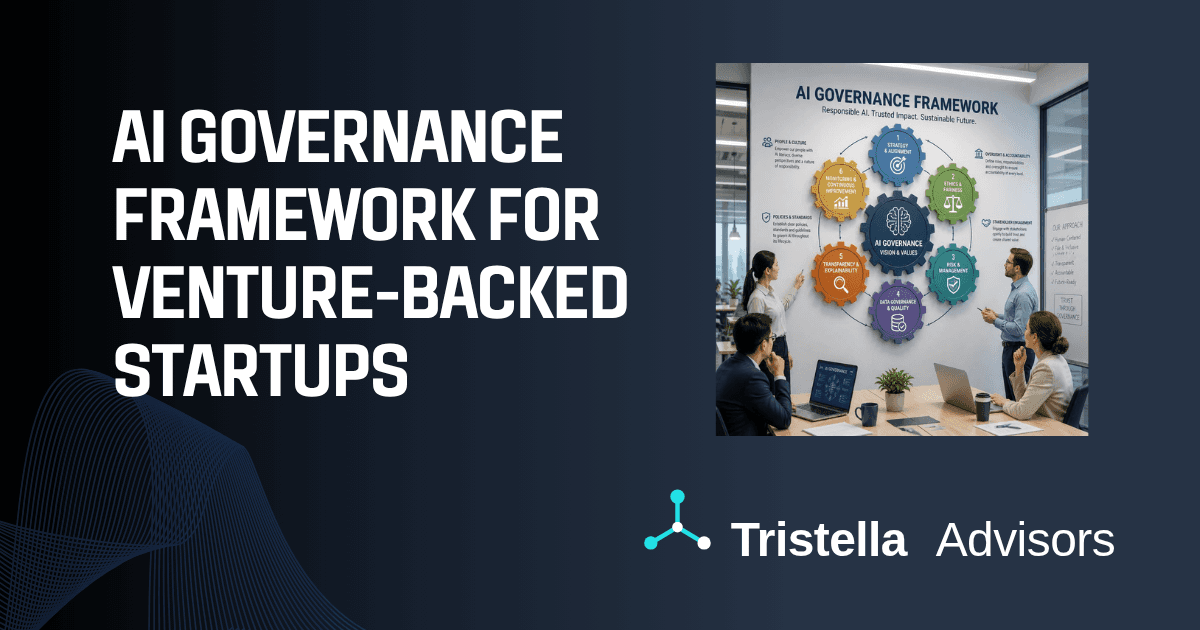
A funded pre-launch startup needs four things before going live with AI: an inventory of every AI system in the product and in internal operations, a use-policy document that defines what the AI does and does not decide, a named accountable owner, and a one-page governance summary for investors and enterprise buyers. That is the minimum viable governance posture. It can be built in two to four weeks. Everything beyond that depends on whether you are entering a regulated market, pursuing enterprise sales, or preparing for Series B and above. This post covers the staged framework and why NIST AI RMF and ISO 42001 fit differently depending on where you are in the journey.
Should I Hire a Boutique Firm or a Big 4 Firm for AI Governance Advisory?
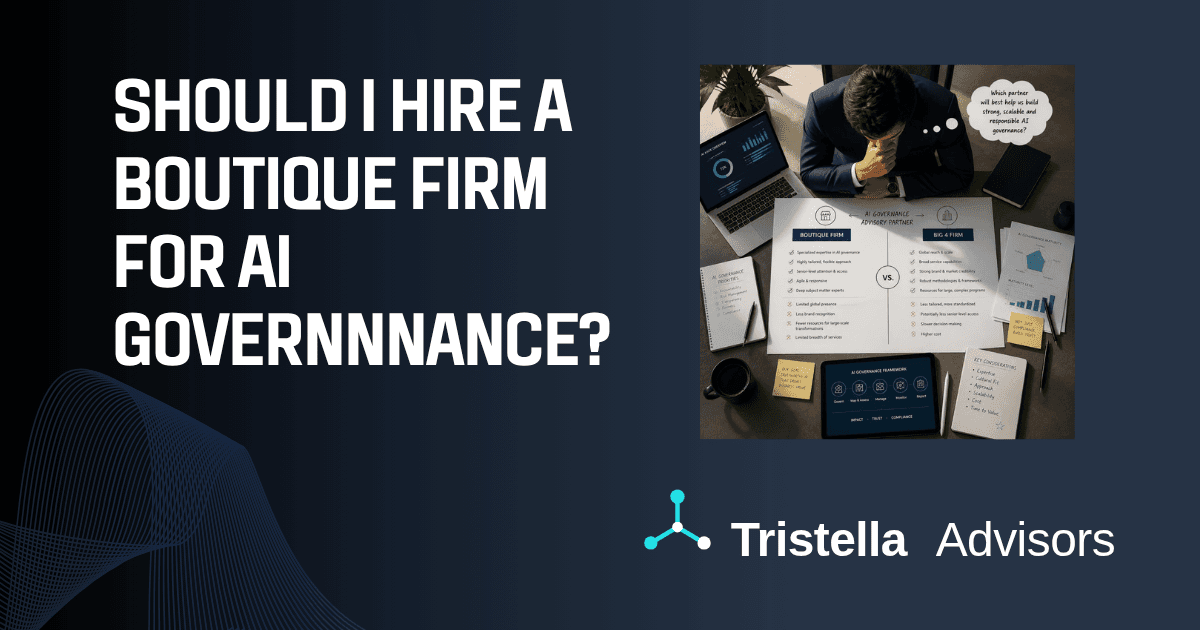
Big 4 AI governance engagements typically start at $500,000 and run three to six months before the first deliverable is in hand. A scoped boutique engagement can start governance work in weeks. That cost-and-timeline gap is real, but it's not the only factor worth understanding before you choose. This comparison covers what you actually gain and lose with each model, when the Big 4 brand on the cover page is worth the premium, and when senior-practitioner direct access from a boutique firm produces more value than a staffed-up engagement team.
What Are Multi-Agent AI Systems and How Should Your Organization Govern Them?
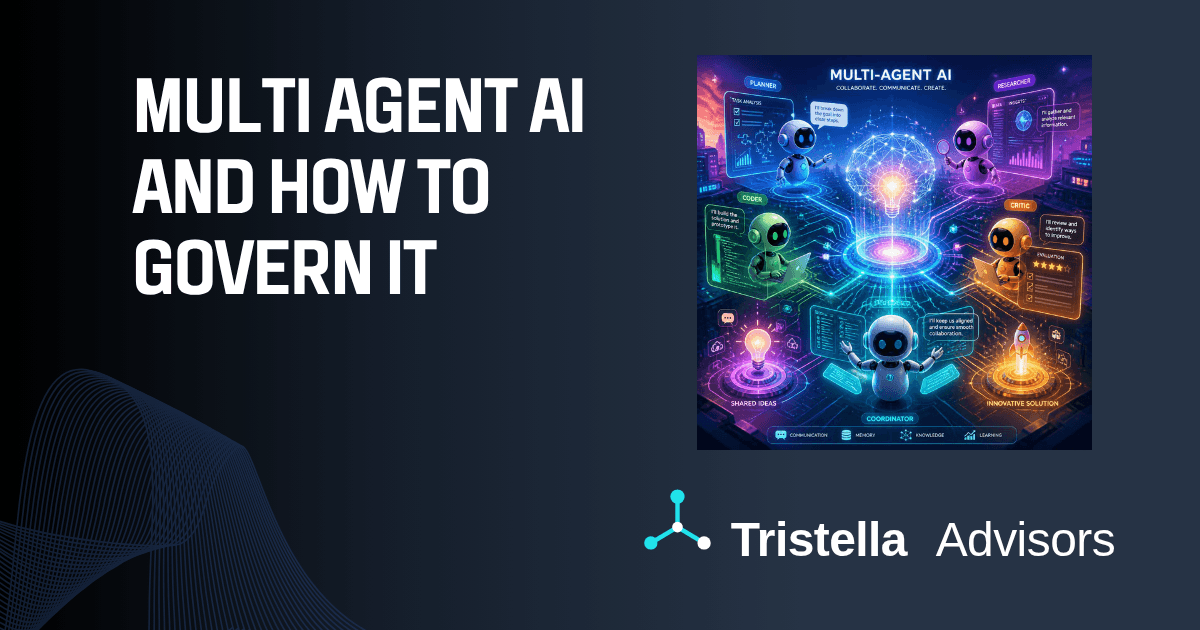
Most organizations are still figuring out how to govern a single AI model. The problem is that the market has moved past that problem. The AI systems going into production in 2026 are networks of specialized agents coordinating across tools, databases, and APIs to complete tasks that used to require a human in the loop. Gartner projects 40% of enterprise applications will include AI agents by year's end. Only 21% of the organizations planning to adopt agentic AI have a mature governance model in place. This post explains what multi-agent systems actually are, why they break the governance frameworks built for single-model AI, and what your organization needs to address before the next deployment, not after.
AI governance gaps and the risks to your company
Most companies have an AI governance policy. Very few have actually implemented one. New research from Grant Thornton, Deloitte, and McKinsey shows that nearly four in five executives couldn't pass an AI governance audit today, and the consequences, regulatory fines up to 7% of global revenue, rising litigation, and reputational incidents, are no longer hypothetical. Here's where the gap is, what it costs, and what good governance actually requires.