Fractional CTO
Fractional CTO services give growth-stage companies access to senior technical leadership without the cost or commitment of a full-time hire. The posts here cover when a fractional CTO makes sense, what to expect from the engagement, how pricing works, and how to evaluate firms. Whether you are pre-seed or approaching Series A, these guides are written for non-technical founders making a technical leadership decision.

Best Interim CTO Firms for Startups and PE-Backed Companies in 2026: How to Evaluate Your Options
Interim CTO engagements are full-time, time-boxed, and deliverable-focused, a different structure from fractional CTO coverage, and one that requires a different kind of firm to execute well. This post evaluates six firms across distinct models: boutique specialists (Tristella, Cerius), established fractional and interim C-suite networks (TechCXO, Chief Outsiders), a marketplace (Toptal), and an executive search firm with an interim placement practice (Cowen Partners). Each write-up covers what the firm is best for, what its limitations are, and which situation it actually serves well.
Best Fractional CTO Firms for Startups in 2026: How to Evaluate Your Options
Not all fractional CTO firms serve the same startup profile, and choosing the wrong model (boutique firm vs. marketplace vs. advisor network) is as consequential as choosing the wrong person. This post evaluates six firms across three categories, using criteria that actually distinguish them: who you get versus who the firm leads with, whether the practitioner has startup or corporate background, AI competency as a baseline requirement in 2026, and whether the engagement model delivers accountability or just access. The firms covered include Tristella Advisors (the publisher of this post, positioned for non-technical funded founders at the pre-seed to Series A stage), TechCXO, Toptal, CTOx, Fractionus, and Connectd. The final section maps each firm to the founder profile it actually serves best.
What Is a Fractional AI CTO and When Does an AI-Native Startup Need One
Most fractional CTOs who describe themselves as "AI-experienced" have integrated AI tools into client work or built AI features on top of existing products. That is not the same as owning the architecture of a product whose core value proposition is AI. A fractional AI CTO is a specific thing: senior technical leadership for companies building AI-native products, with hands-on domain expertise in model selection, RAG architecture, inference cost management, evaluation infrastructure, and AI governance baked into the product layer. This post defines what that role actually covers, how it differs from a generalist fractional CTO and from the Chief AI Officer role enterprises are creating, when an AI-native startup needs that specialization versus when a generalist is sufficient, and what the AI expertise premium looks like in practice.
What Is an Interim CTO? Services, Costs, and When Full Coverage Is What You Actually Need
Organizations searching for "interim CTO" and "temporary CTO" are usually at a different moment in the decision than those exploring fractional CTO arrangements. They have a specific situation, a compressed timeline, and a need that a part-time ongoing relationship cannot address. This post clarifies what interim CTO actually means versus fractional and temporary, explains the specific situations that call for full-coverage executive presence (CTO departure, post-acquisition integration, PE portfolio stabilization, crisis management), and covers what an interim engagement actually looks like from scope definition through knowledge transfer. It also addresses the private equity use case in detail: why PE firms use interim CTOs post-acquisition, what a rapid technical assessment delivers, and how interim coverage transitions into a fractional retainer once the acute situation is resolved. Pricing: $8,000 to $15,000 per week.
Fractional CTO for Pre-Series A Startups: What You Actually Need Before You Raise
The pre-Series A window is the highest-leverage period for fractional CTO work, and also the most commonly misunderstood. Most founders at this stage are not short on technical progress. They are short on someone who has prepared a company for Series A technical diligence before, knows what investors actually examine, and can get the architecture, security posture, engineering team, and technical roadmap into a state that survives scrutiny rather than creates problems in it. This post is specifically for founders between seed close and Series A raise: what a fractional CTO should actually be doing for you in this window, why the fractional model fits this stage better than a full-time hire, what to look for when evaluating fractional CTO firms for pre-Series A work, and when to make the transition to a full-time hire after the round closes.
Fractional CTO Rates in 2026: Hourly, Day Rate, Monthly Retainer, and What Drives the Difference
Most fractional CTO rate questions are really three different questions bundled together: what does an hour of this person's time cost, what does a focused day engagement run, and what does a monthly retainer look like? The answers depend on experience level, domain specialization, engagement depth, and whether you are working with an independent operator or a firm — and the ranges are wide enough that comparing quotes without understanding what drives them is genuinely difficult. This post breaks down all three rate structures, explains what you should expect at each price point from entry-level advisory to senior specialist, and gives you a framework for evaluating whether a given rate reflects the depth you actually need. Tristella's published rates are included so you have a real-world anchor.

Fractional CTO Services for Private Equity and VC Portfolio Companies
Private equity and VC firms need senior technical leadership across their portfolio, but the math on a full-time CTO at every company rarely works. Fractional CTO services solve the cost and coverage problem, provided the firm engages a provider structured to work across a portfolio rather than one that pitches senior partners and staffs junior consultants. This post covers how PE and VC firms actually use fractional CTOs, the two engagement models that work, what a fractional CTO does inside a PE-backed company, how technical due diligence functions as a starting point, and what to demand from a firm before you put them in front of your portfolio.
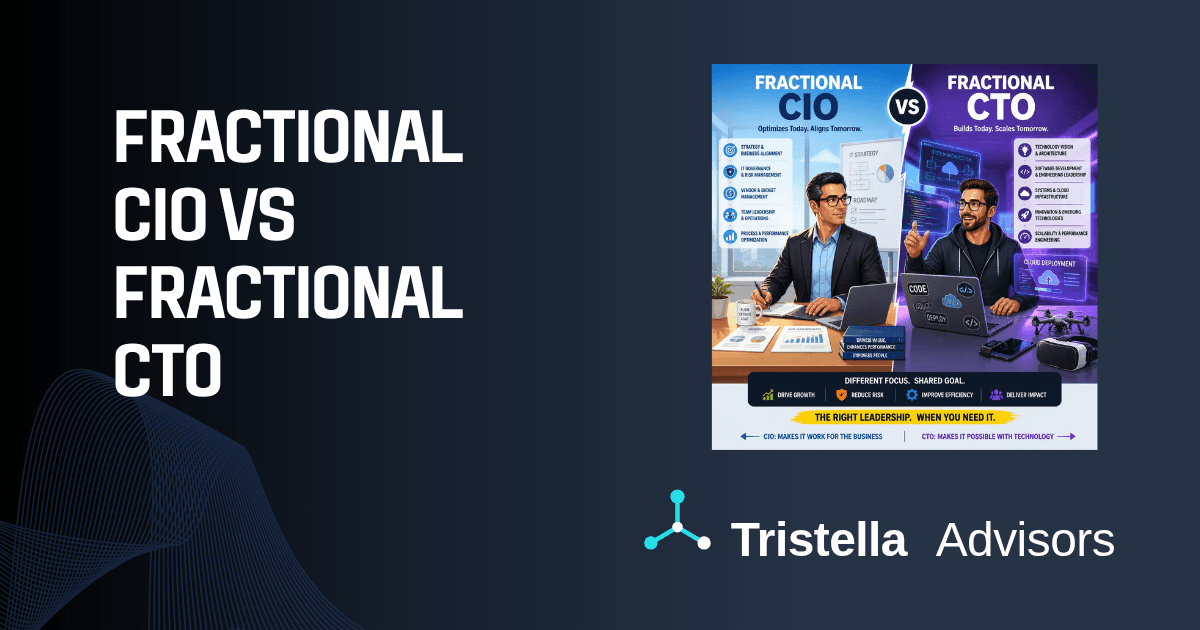
Fractional CIO vs. Fractional CTO: Why Most Funded Startups Need One and Not the Other
The post makes the ICP case in the second section ("What a CTO actually does") and again explicitly in the diagnostic section, while staying credible by honestly describing when a fractional CIO IS the right answer. The "category error to watch for" section is designed to capture founders mid-search who are accidentally evaluating the wrong kind of candidate.
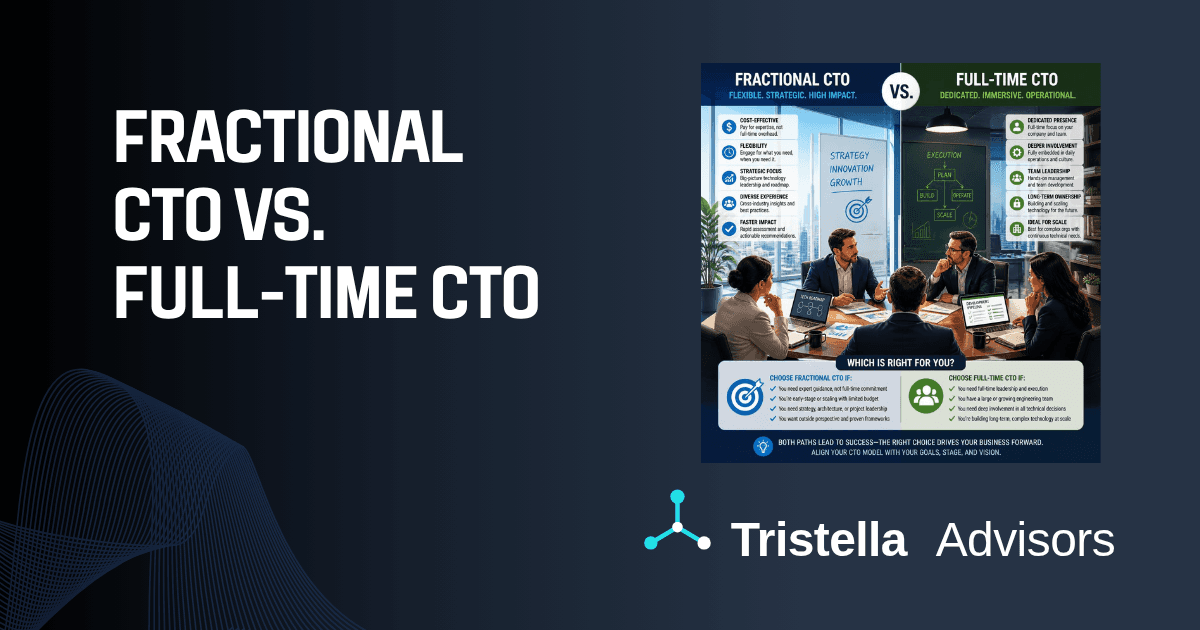
Fractional CTO vs. Full-Time CTO: When Each Model Makes Sense (2026)
The fractional CTO and the full-time CTO are not competing versions of the same job. They are the right answer to different questions at different stages of a company's life. This post compares both models across what actually matters: what each provides that the other cannot, 2026 cost data, a stage-by-stage decision framework, and what the transition from fractional to full-time looks like when it is done well.

Fractional CTO for VC and PE Portfolio Companies: How Funds Structure Technical Leadership Across a Portfolio
If you are a general partner, operating partner, or portfolio support lead at a VC or PE firm, the fractional CTO question is not about one company's technical leadership gap. It is about solving it across a portfolio of companies at different stages and with varying urgency levels, while managing conflicts of interest, operating partner reporting, and deployment speed when a portfolio company faces a crisis. This post covers how portfolio-level fractional CTO coverage works, how the engagement structure differs between venture and private equity contexts, the specific questions a fund should ask before engaging a firm, and what this costs relative to individual company retainers.
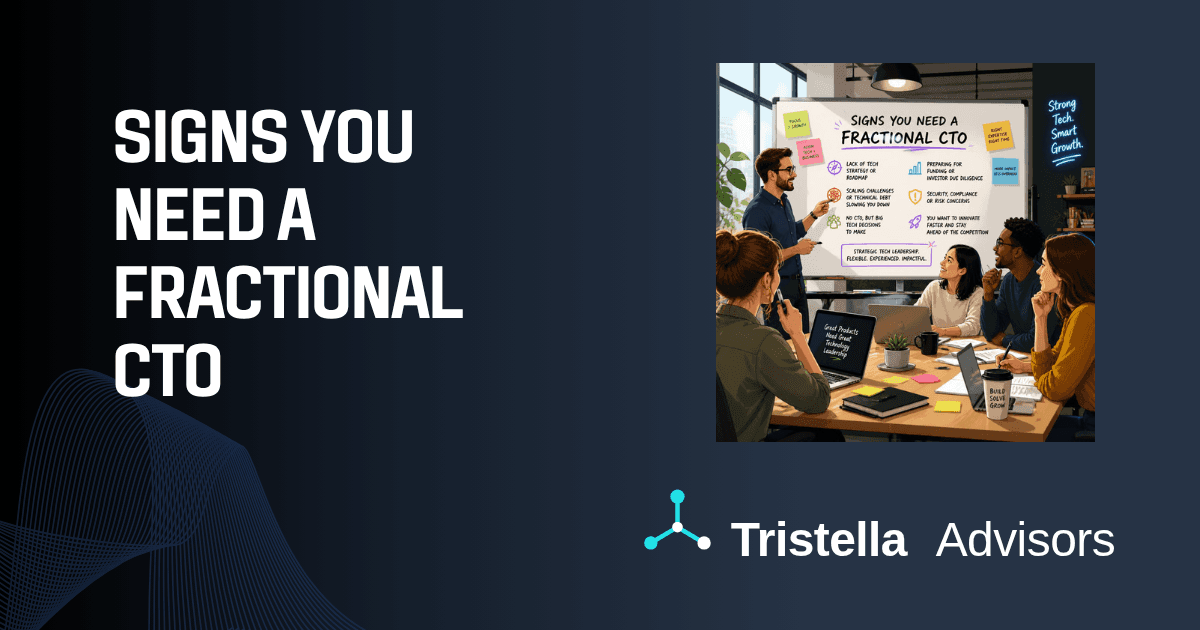
Signs You Need a Fractional CTO
The clearest sign you need a fractional CTO is a consequential technical decision sitting in front of you with no one on your team who has made it before. The harder-to-see version is the slow accumulation of choices made without senior judgment, which has quietly constrained the business. This post covers ten specific patterns, from non-technical founders without a technical evaluator to engineering teams shipping AI without production AI experience, plus the situations where a fractional CTO is not the answer.
What Is a Fractional CTO? Complete Guide (2026)
A fractional CTO provides the same strategic technology leadership as a full-time CTO, including roadmap ownership, architecture decisions, engineering team direction, and board-level technical representation, at 10 to 20 hours per week and without the six-to-twelve-month search. Full-time CTO total compensation at a growth-stage startup runs $400,000 to $650,000 all-in. Fractional engagements run $10,000 to $25,000 per month. This guide covers what a fractional CTO actually does, how the role differs from a VP of Engineering, a consultant, and a full-time hire, when the model fits, what it costs in 2026, and what to look for when evaluating firms.
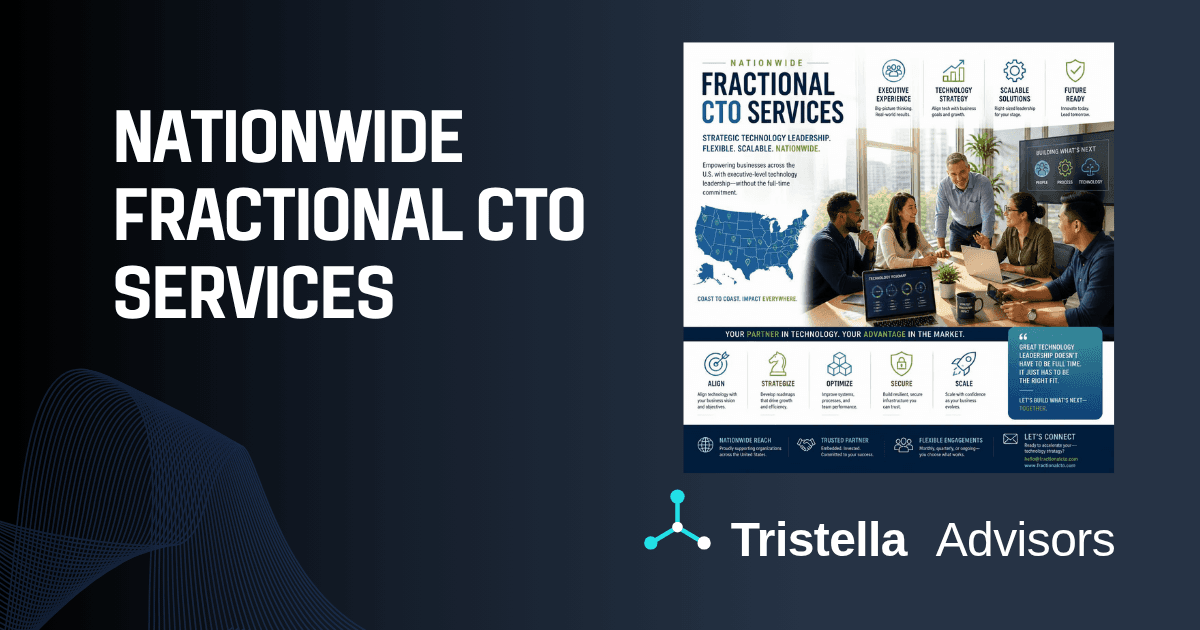
Fractional CTO Services for New York, California, Washington, DC, and Beyond: How Remote Fractional CTOs Work
Tristella Advisors is based in Maine and Pennsylvania. Most fractional CTO clients will come from New York, California, Washington, DC, and Seattle. That is not a contradiction. The search queries that land founders on this page all reflect the same instinct: find someone local because local means accessible. That instinct is understandable and mostly wrong. This post covers how remote fractional CTO engagements work operationally, what makes each major startup market distinctive, and how to evaluate fractional CTO companies and consulting firms before you hire one.
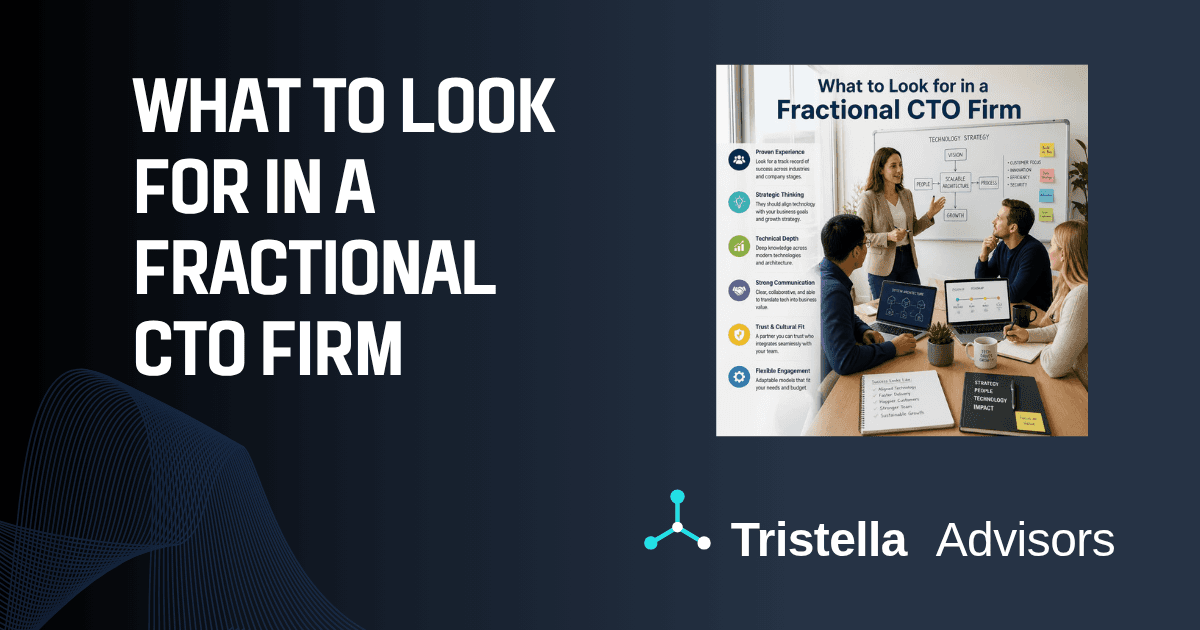
What to Look for in a Fractional CTO Firm: 7 Questions to Ask Before You Hire
The fractional CTO market has grown fast enough that "fractional CTO" no longer tells you much about what you're actually getting. Some firms bring decades of operator experience and domain depth. Others are solo freelancers from a talent marketplace. These seven questions sort one from the other before you sign anything.
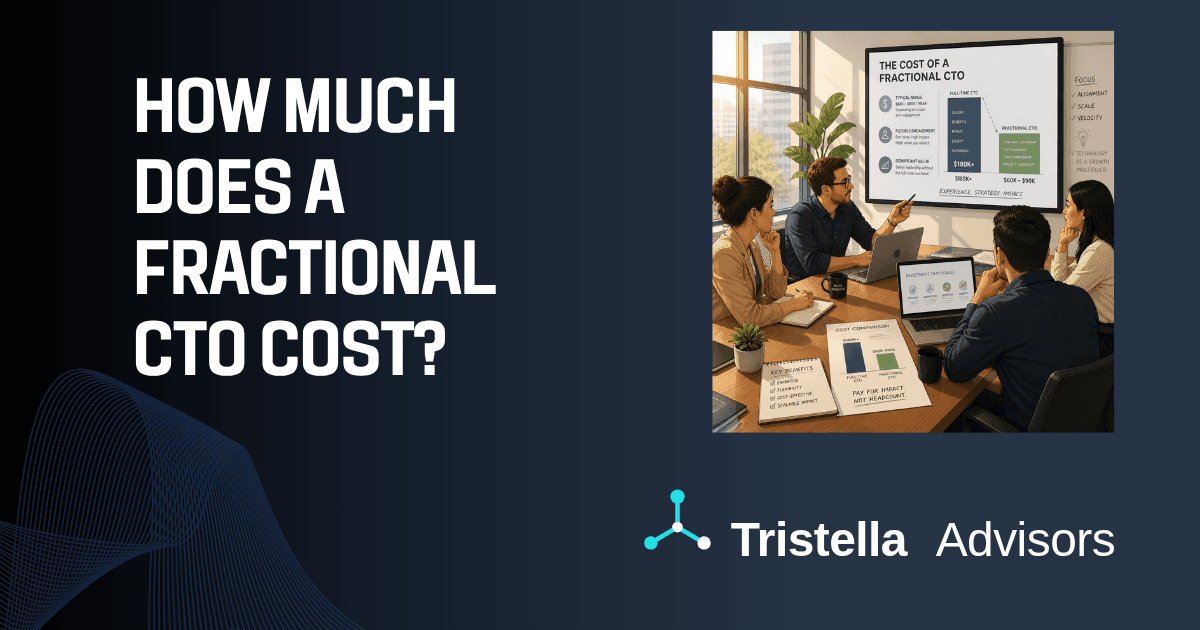
How Much Does a Fractional CTO Cost? Monthly Retainers, Hourly Rates & Day Rates (2026)
A fractional CTO engagement typically runs $8,000 to $15,000 per month. A full-time CTO at seed stage costs $300,000 to $500,000+ in year one once salary, equity, benefits, and recruiting fees are included, with a three- to four-month search delay on top. Here's how to think through the math at your stage.
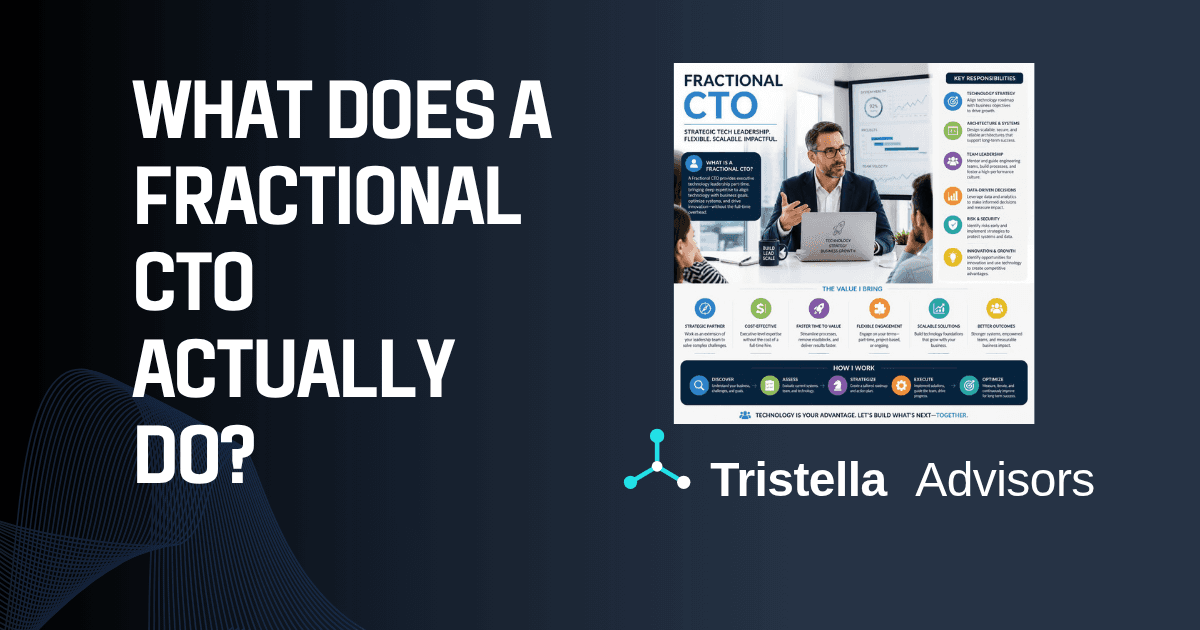
What does a fractional CTO actually do week to week?
Strategic technology leadership" doesn't tell you much. Here's what a fractional CTO actually does with their time: a week-one technical audit that maps what you actually have versus what you think you have, 5 to 8 hours a week of architecture-level code review, vendor and technology decisions two to four times a month, hiring support as you build your engineering team, and the investor credibility to sit in due diligence and answer the hard questions. This post breaks down exactly where the hours go, what a fractional CTO does not do, and how the engagement typically evolves from assessment to ongoing oversight to handing off to a full-time hire.

What to Do in the First 90 Days with Seed Funding if You Don't Have a Technical Co-Founder
The wrong tech stack at the seed stage can cost 18 months and $500K before Series A. Here's the 90-day decision sequence that protects your runway.
The math on fractional vs. full-time CTOs for founders
Most funded founders are told to hire a CTO. The search takes six months, costs $400,000-$500,000 all-in, and 40% of those hires don't make it to 18 months. There's a better model, and the market has figured it out.